20 April 2024, Volume 54 Issue 2
    

  • Select all
    |
    REVIEW
  • WANG Guanghui, FAN Jun, LIU Huiquan
    Acta Phytopathologica Sinica. 2024, 54(2): 225-234. https://doi.org/10.13926/j.cnki.apps.000871
    Abstract ( ) Download PDF ( )   Knowledge map   Save
    Clonostachys species are a group of fungi with various morphological and ecological characteristics, which are widely distributed in a variety of environmental conditions, especially in soil. Because Clonostachys can control plant diseases through direct or indirect mechanisms including antagonism, mycoparasitism, growth promotion and the induction of plant resistance, the application of Clonostachys as a biocontrol agent has attracted much attention. In this review, we summarized the progress in phylogeny and taxonomy of this genus, and the interactions of Clonostachys-plant pathogens and Clonostachys-plants. Then, the application status of Clonostachys was summarized and its application prospect was also prospected. Screening strains with excellent biological control characteristics from Clonostachys fungi will promote their commercialization in agricultural applications.
  • ZHANG Yafen, GONG Liue, HU Yingli, WANG Jiaoyu, SUN Guochang
    Acta Phytopathologica Sinica. 2024, 54(2): 235-248. https://doi.org/10.13926/j.cnki.apps.000858
    Abstract ( ) Download PDF ( )   Knowledge map   Save
    Sho1 and Msb2 are respectively four-transmembrane membrane proteins and single-chain transmembrane protein. Resent research shows that they generally exist in fungi,and have conservative structures, including extracellular domain, transmembrane structure and cytoplasmic domain. Sho1 is located in the plasma membrane, and Msb2 is located in the plasma membraneand transported into the vacuole through endocytosis. Different domains of Sho1 and Msb2 bind to various signaling proteins, then participate in different pathways in the MAPK signaling pathway, so as to regulation of fungal growth and stress response. At present, the functions of Sho1 and Msb2 have been reported in Saccharomyces cerevisiae, Candida albicans, Aspergillus fumigatus, Verticillium dahliae, Fusarium oxysporum, F. graminearum, Ustilago maydis, Magnaporthe oryzae, Botrytis cinerea, Cryptococcus neoformans, and Histoplasma capsulatum, that mainly involved in filamentous growth, osmotic stress, oxidative stress, cell wall integrity, temperature response, and virulence regulation of fungi. However, their specific functions have fungal evolution specificity. This paper reviewed the structural characte-ristics of Sho1 and Msb2, summarized and analyzed the functions and action ways of Sho1 and Msb2 in different fungi, in order to provide reference for related research.
  • ETIOLOGY
  • LIU Kun, SUN Wensong, ZHANG Tianjing, SHEN Baoyu, LI Xiaoli
    Acta Phytopathologica Sinica. 2024, 54(2): 249-258. https://doi.org/10.13926/j.cnki.apps.001612
    Abstract ( ) Download PDF ( )   Knowledge map   Save
    Asarum plants showing leaf blight symptoms were collected from Xinbin County, Fushun City, Liaoning Province, China. To investigate the causal agent of the disease, pathogenicity test was carried out with XXY-2, a representative fungal strain that were isolated from the diseased plant tissues, and the result showed that it is the pathogen causing asarum leaf blight. Based on morphological characters, strain XXY-2 was identified as Talaromyces brevis. According to the results of multigene-combined (rDNA-ITS+BenA+RPB2) phylogenetic analysis, strain XXY-2 was grouped into the same branch of T. brevis model strains DTO 307T and CBS 141833T, further confirming that it belongs to T. brevis. Indoor toxicity tests of 8 fungicides against strain XXY-2 showed that pyraclostrobin and fludioxonil had a better inhibitory effect on mycelial growth of the strain, with EC50 values of 0.0096 and 0.0056 μg·mL-1, respectively. This is the first report of T. brevis as a pathogen of asarum leaf blight, making a theoretical basis for integrated control of the disease.
  • ZHANG Zimeng, LU Meiguang, YANG Lijuan, LI Shifang
    Acta Phytopathologica Sinica. 2024, 54(2): 259-268. https://doi.org/10.13926/j.cnki.apps.000859
    Abstract ( ) Download PDF ( )   Knowledge map   Save
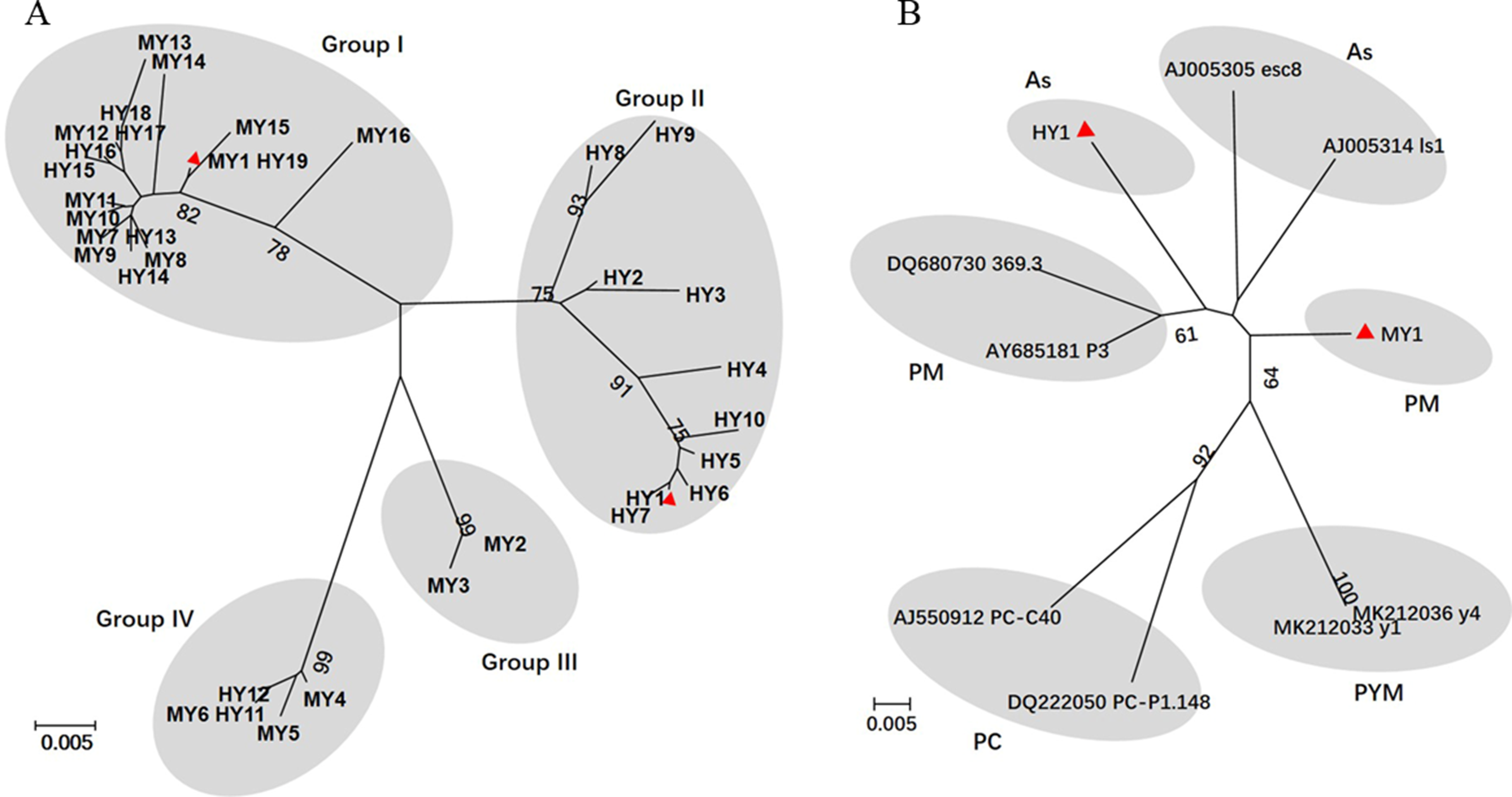
    Peach latent mosaic viroid (PLMVd) is an important viroid infecting peach trees. PLMVd can cause various leaf symptoms including mosaic, yellowish and calico, etc. At present, the mechanism of PLMVd infection causing mosaic leaves is unknown. In this study, 86 full-length PLMVd sequences, in size of 336-338 nt, were isolated and cloned from the mosaic (M) and asymptomatic (N) leaves of nectarine trees collected in the field in China. By DnaSP 5.0 analysis, 31 haplotype (variant) sequences were obtained in the cloned sequences. The haplotype diversity (Hd) was relatively low as 0.79 for M isolates, while was high as 0.90 for N isolates. Compared with N isolates, sequence analysis showed that the sequence variation of M isolates mainly occurred in five regions of the whole sequence. MY1 haplotype sequence was dominant among those of M isolates, which clustered in phylogenetic group I with a few other variants and shared 89.4% identity with that of P1.148, a typical peach calico isolate. Through a comparative study of PLMVd cDNA infectious clones, gene synthesis and inoculation methods, the infectious PLMVd diploid cDNA clone construction and effective inoculation methods were established. The constructed MY1 diploid cDNA recombinant plasmid can infect the Prunus davidiana Franch systematically and exhibit typical mosaic symptoms after high-stressed stems slashing inoculation. The results will build a foundation for further study about the molecular mechanism of PLMVd inducing peach mosaic symptom.
  • DU Yumeng, ZHAO Lihua, ZHANG Shaozhi, WANG Tiantian, ZHANG Zhongkai
    Acta Phytopathologica Sinica. 2024, 54(2): 269-278. https://doi.org/10.13926/j.cnki.apps.001321
    Abstract ( ) Download PDF ( )   Knowledge map   Save
    Watermelon planted in early spring is a characteristic fruit in hot area of Yunnan Province. Its viral diseases are more and more serious in recent years. To detect and identify the main viruses, the plants and fruits samples of watermelon were collected from Menghai county, Xishuangbanna state, and transmission electron microscope (TEM) observation, indirect enzyme-linked immunosorbent assay (ID-ELISA), RT-PCR amplification and analysis of viral genome sequences were carried out. The results showed that the viruses infecting watermelon were watermelon silver mottle virus (WSMoV) and cucumber mosaic virus (CMV). The detection rates of WSMoV and CMV using ID-ELISA were 70% and 20%, respectively, in leaf samples, and of complex infection was 15%. The detection rates of these two viruses by RT-PCR were 100% and 65%, respectively, and of complex infection was 65%. However, the complex infection rate of these two viruses detected by RT-PCR amplification could reach up to 100% in seeds. Phylogenetic analysis demonstrated that the genome sequences of WSMoV [21YV-40(GenBank accession no.:OP617563), 21YV-43(GenBank accession no.:OP867047)] isolated in this study were similar to the squence of WSMoV [Banna-2011 (GenBank accession no.:KM242056)] isolated from Yunnan watermelon in 2016, and the similarity was 99%. The genome sequences of CMV [CMVYN40(GenBank accession no.:OP617565), CMVYN46 (GenBank accession no.:OP617566)] isolated in this study were similar to the sequence of CMV [A27(GenBank accession no.:FN552545)] isolated from watermelon in Thailand, and the similarity was 98%. This study demonstrated that the early spring watermelon was mainly infected by WSMoV and CMV, and complex infection was also common. The complex infection of WSMoV and CMV to both the plant and the seed of watermelon was reported for the first time. This study supplied a basis for virus prevention in the early spring watermelon.
  • HAN Zhilei, LI Guangyan, SUN Xiaohui, WU Bin, HONG Hao, PANG Zongyang, WANG Shusen, XIN Zhimei, ZHU Xiaoping, JIANG Shanshan
    Acta Phytopathologica Sinica. 2024, 54(2): 279-290. https://doi.org/10.13926/j.cnki.apps.001327
    Abstract ( ) Download PDF ( )   Knowledge map   Save
    To understand the occurrence and genetic evolution of sweet potato chorotic fleck virus (SPCFV) in Shandong province, China, 131 sweet potato samples were collected for the detection of SPCFV in 2019 and 2020, and two complete sets of genome sequences were amplified and analyzed. The SPCFV detection rate in 2019 and 2020 was 7.1% and 5.6%, respectively. All positive samples were co-infected with SPCFV and other sweet potato viruses. The two complete sets of genome sequences (CFV-SD1, CFV-SD2) were obtained by RACE and RT-PCR, with a total length of 9 105 bp and a nucleotide similarity with the reported isolates was 72.9% to 89.5%. Phylogenetic analysis of genome sequences revealed that all SPCFV isolates clustered into two groups based on the CP genes of six Shandong isolates and that all Shandong isolates belong to the Asian group (Asian isolates 1). Amino acid preference analysis showed that the first 35 amino acids in the N-terminal region of the SPCFV CP protein exhibited variation. This study indicated that Shandong province has become a frequent occurrence area of SPCFV and the virus population was diverse. The results provide a theoretical basis for the effective prevention and control of SPCFV.
  • FANG Kui, FANG Yiwu, LI Min, YANG Yan, ZHOU Jian, ZHONG Jie, ZHANG Ye, DU Yu
    Acta Phytopathologica Sinica. 2024, 54(2): 291-303. https://doi.org/10.13926/j.cnki.apps.001018
    Abstract ( ) Download PDF ( )   Knowledge map   Save
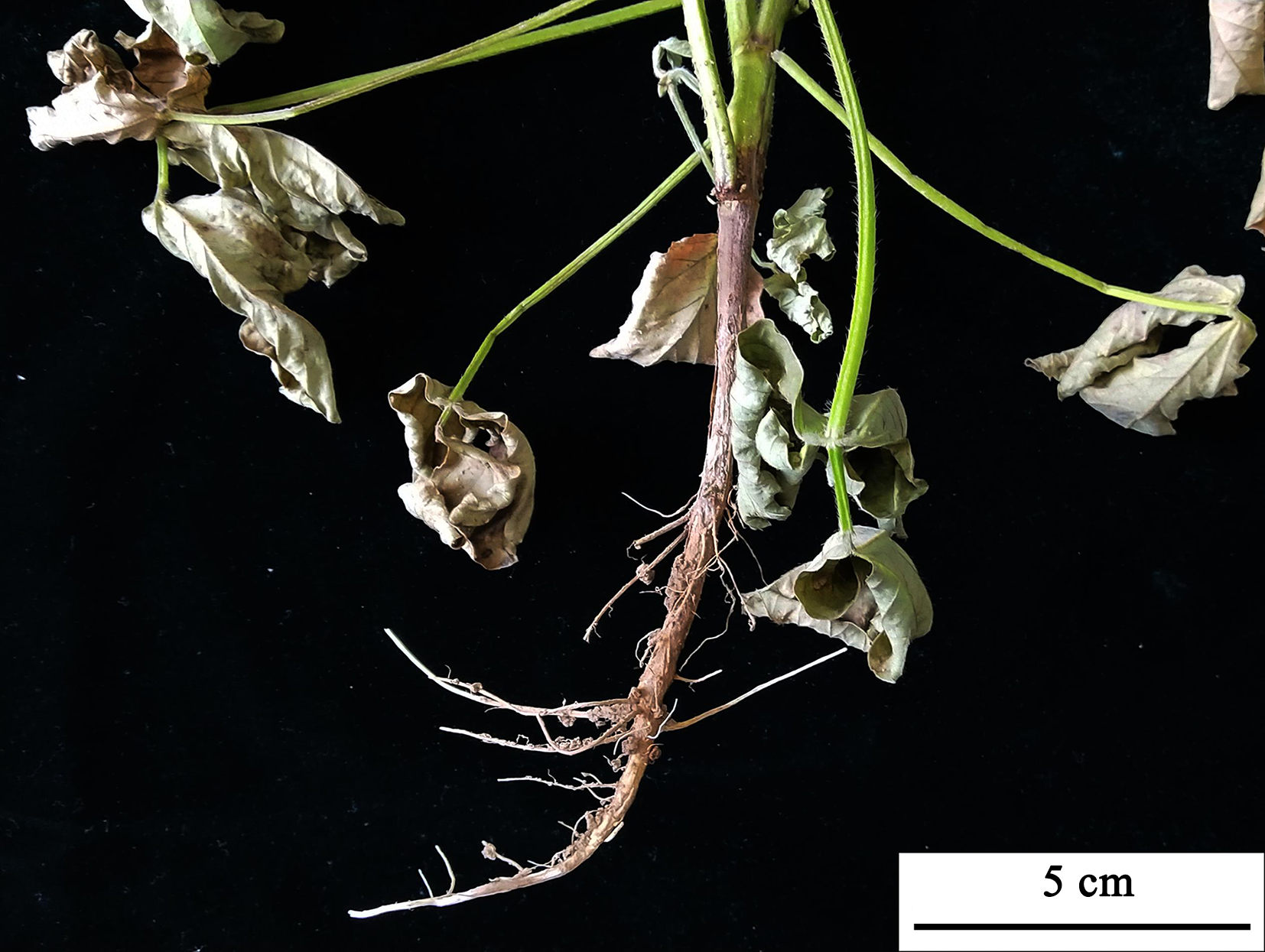
    Two species of spiral nematode were intercepted from the rhizosphere of Acer palmatum Thumb. imported from the Netherlands, which were identified as Helicotylenchus microcephalus Sher and Rotylenchus robustus (Thorne) Loof & Oostenbrink, respectively, based on both morphological and molecular characteristics. There are no reports on these two species in the Netherlands. It was also the first record on the damage of two nematodes on A. palmatum. The 50:1 population proportion of two nematodes indicated that H. microcephalus was the predominant ones. Finally, the obviously pathological symptoms were observed on the roots of A. palmatum.
  • YANG Yimeng, FENG Yeqing, DONG Hailong, ZHAO Zengqi, WANG Jianming, XU Yumei
    Acta Phytopathologica Sinica. 2024, 54(2): 304-317. https://doi.org/10.13926/j.cnki.apps.001019
    Abstract ( ) Download PDF ( )   Knowledge map   Save
    Eight populations of Ditylenchus destructor were isolated from three tuber crops (Solanum tuberosum, Dioscorea esculenta and Dioscorea polystachya) in Shanxi Province. Morphology characteristics of D. destructor populations were observed and measured, and then the morphological data were analyzed by SPSS and PCA software. Nematode universal primers were used for PCR amplification and sequencing of rDNA-ITS. Similarity distance and sequence alignment were analyzed by Geneious Prime 2019.2.3 and DNAMAN 9.0 software, respectively. Analysis of variance of molecular variance (AMOVA) was constructed by Arlequin 3.5 software. The phylogenetic tree and haplotype network diagram were constructed by MrBayes 3.2.7 and PopART 4.8.4 software, respectively. The results showed that seven populations of D. destructor (YH277, YH279, tg38, XF01, CZ15, TY15 and tg49) are belong to type A, and their hosts are D. esculenta, S. tuberosum, and D. polystachya. Nevertheless, the PX04 population is belongs to type C and the host is S. tuberosum. The morphology of PX04 population is significantly different from the other seven populations, with the PX04 population having a slightly pointed tail. PCA analysis result also suggested that PX04 population was obviously separated from the other seven populations. The result of haplotype network structure was constructed using 77 ITS sequences of D. destructor isolated from D. esculenta, D. polystachya and S. tuberosum. The results showed that two shared haplotypes and 26 unique haplotypes. Among them, the frequency of the H1 was the highest among the three tuber crops, which suggests that it might be an ancestral haplotype; Among 26 unique haplotypes, the highest number of exclusive haplotypes and the most abundant haplotype and nucleotide diversities were found in the population of D. destructor parasitized the S. tuberosum, with a haplotype diversity index (Hd) of 0.841 and the inter-population nucleotide diversity index (Pi) of 0.005 02. The result of AMOVA analysis showed that the genetic differences of the D. destructor in Shanxi Province were mainly from inter-populations, and there was a sizeable genetic differentiation between type A and C of D. destructor.
  • CELL BIOLOGY, PHYSIOLOGY, BIOCHEMISTRY, AND MOLECULAR BIOLOGY
  • ZHAO Di, CHEN Shengnan, ZHANG Die, WANG Hongyang, CHEN Aie
    Acta Phytopathologica Sinica. 2024, 54(2): 318-331. https://doi.org/10.13926/j.cnki.apps.001607
    Abstract ( ) Download PDF ( )   Knowledge map   Save
    Myb transcription factors play important roles in the regulation of various biological processes in plants. However, the molecular mechanism underlying their roles in regulating late blight resistance remains elusive. Here, we report the cloning of NbMybl, a Myb-like gene from Nicotiana benthamiana, which has an open reading frame of 753 bp and encodes a protein of 250 aa. NbMybl contains a Myb-like DNA-binding domain. Real-time quantitative PCR (qPCR) revealed that NbMybl was induced by infection with Phytophthora infestans. Subcellular localization analysis showed that NbMybl is located in both the nucleus and the cytoplasm. Silencing of NbMybl by virus-induced gene silencing (VIGS) significantly increased the susceptibility of plants to P. infestans. Transcriptome profiling by RNA sequencing identified 8468 differentially expressed genes (DEGs) with fold change ≥ 2 and FDR < 0.01 between NbMybl silenced and non-silenced control lines in response to P. infestans infection, and the result of RNA-seq was further validated by qPCR with 10 randomly selected DEGs. KEGG (Kyoto Encyclopedia of Genes and Genomes) enrichment analysis revealed that a total of 373 DEGs were involved in plant-pathogen interaction, 308 DEGs and 216 DEGs were involved in MAPK signaling pathway and plant hormone signal transduction, respectively. We speculated that these DEGs might be closely related to the reduced resistance of NbMybl-silenced N. benthamiana lines to P. infestans. Our study provides valuable insights into the molecular mechanisms of NbMybl in regulating resistance to P. infestans.
  • WANG Xiaoyan, CONG Weiwei, CHEN Li, ZHANG Chengqi
    Acta Phytopathologica Sinica. 2024, 54(2): 332-342. https://doi.org/10.13926/j.cnki.apps.000876
    Abstract ( ) Download PDF ( )   Knowledge map   Save
    Caspase is known to be involved in modulating apoptosis in mammals,controlling the occurrence and development of various diseases. In present study, the null mutant ΔFgCas4 and complemented strain ΔFgCas4-C of the caspase gene FgCas4 were obtained by gene disruption and complementation respectively in Fusarium graminearum. We observed that the FgCas4 deletion mutant (ΔFgCas4) did not affect the growth rate, colony morphology, conidiation, virulence and DON production. However, the deletion mutant ΔFgCas4 exhibited more hyphal branching and percentage of conidia with 3 septa increased by 8.7% compared to wild type PH-1 and complemented strain ΔFgCas4-C. External environmental stress assays showed that the gene disrupt mutant ΔFgCas4 became more sensitive to tested fungicides and metal ions. In addition, the lack of FgCas4 led to dramatically increased lipid droplet biosynthesis as well as increased resistance to osmotic stress agents. Subcellular localization showed that the caspase FgCas4 localized in vacuoles. On the other, the loss of FgCas4 resulted in earlier process of autophagy. Taken together, our study provides evidences that the caspase FgCas4 of Fusarium graminearum plays important roles in asexual reproduction, various environmental stress responses and auto-phagy regulation.
  • LI Na, ZOU Lifang, XIN Yidong, SUN Sheng, GENG Xueqing
    Acta Phytopathologica Sinica. 2024, 54(2): 343-354. https://doi.org/10.13926/j.cnki.apps.001611
    Abstract ( ) Download PDF ( )   Knowledge map   Save
    The bacterial wilt caused by Ralstonia solanacearum has brought a serious threat to tomato production. Coronatine (COR), structurally similar to JA-Ile (JA-isoleucine), is a compound produced by Pseudomonas syringae. In this study, we observed that pre-treatment of tomato seedlings with COR alleviated the symptoms caused by R. solanacearum. To investigate how COR affects tomato resistance to R. solanacearum, transcriptome sequencing of tomato seedlings inoculated with the pathogen 24 h after COR treatment was carried out. Analysis of RNA-seq data showed that COR treatment induced a total of 2122 differentially expressed genes (DEGs), including 998 up-regulated genes and 1124 down-regulated genes. DEGs annotation and pathway enrichment were conducted using GO database and KEGG database, and the results showed that COR affected the expression of genes related to plant-pathogen interaction pathway and plant hormone signaling pathways. Meanwhile, COR induced the up-regulation of genes involved in the jasmonic acid synthesis pathway and inhibited the expression of photosynthesis-related genes. Our results provide a theoretical basis for revealing the role of COR in plant-microbe interaction.
  • GENETICS OF DISEASE RESISTANCE AND PATHOGENICITY
  • WANG Hao, RONG Wei
    Acta Phytopathologica Sinica. 2024, 54(2): 355-363. https://doi.org/10.13926/j.cnki.apps.001026
    Abstract ( ) Download PDF ( )   Knowledge map   Save
    Oidium heveae is an incompatible pathogen of Arabidopsis Col-0, and triggers disease resistance in Arabidopsis in an EDS1 (ENHANCED DISEASE SUSCEPTIBILITY 1) and PAD4 (PHYTOALEXIN DEFICIENT 4) dependent manner, suggesting that TIR-NB-LRR (TOLL INTERLEUKIN 1 RECEPTOR, NUCLEOTIDE-BINDING, LEUCINE-RICH REPEAT) genes may involve in the disease resistance against O. heveae. In this study, the differentially expressed TIR-NB-LRR genes targeting O. heveae were screened, and the expression of WRR4C (WHITE RUST RESISTANCE 4C) gene was found to up-regulated induced by O. heveae. Through inoculation assay, O. heveae was observed to develop dense hyphal network and a few conidia in two wrr4c single mutants, and triggered significantly decreased defense responses including cell death, callose deposition and PR1 (Pathogenesis Related 1) gene expression, indicating that WRR4C positively regulated the disease resistance of Arabidopsis against the powdery mildew of Hevea brasiliensis. However, WRR4C gene did not participate in the cell pre-penetration resistance to O. heveae, and the expression of WRR4C reached to the highest level at 48 hours post inoculation, suggesting that WRR4C genes was mainly involved in the cell post-penetration resistance of Arabidopsis to O. heveae. In addition, we found WRR4C also positively regulated the disease resistance against Erysiphe polygoni in Arabidopsis.
  • WANG Dongyuan, WANG Jichun, SUN Wenxian, ZHU Feng, WU Xian, QI Shanyan, OU Yuping
    Acta Phytopathologica Sinica. 2024, 54(2): 364-376. https://doi.org/10.13926/j.cnki.apps.000860
    Abstract ( ) Download PDF ( )   Knowledge map   Save
    To master pathogenic characteristics of Pyricularia oryzae is the premise and foundation of screening germplasm, breeding resistance, and deploying rice varieties resistant to blast. In this study, total 166 isolates of rice blast fungi were collected from Japonica rice planting area in Jilin Province, northeast China, and were inoculated to 7 Chinese differential varieties (CDVs) and monogenetic differential varieties (MDVs) which harbored 23 resistance genes in greenhouse condition, then pathogenicity was clarified in accordance with compatibility reaction. Those isolates were categorized into 7 groups and 44 races according to the CDVs' phenotypes, in which the dominant Chinese race group was ZA at the frequency of 45.18%, and the dominant races were ZA17(19.28%) and ZG1(9.64%), respectively. No dominant race types with U-i-k-z-ta criteria were demonstrated according to the MDVs' phenotype data, but the sub-groups data were prominent, and the higher sub-groups with frequency were U73(47.0%), i5(31.9%), and i7(31.9%), respectively. Based on the MDVs data, the higher frequency of the avirulence genes, Avr-Pi12(74.69%), Avr-Pi9(72.28%), Avr-Pi19(68.67%), and Avr-Pi20(68.07%), which indicate that broad spectrum genes were Pi12(t), Pi9(t), Pi19(t), Pi20(t), respectively. The information of the types of dominant avirulence genes not only presents the pathogenicity of blast fungus, but also reflects the types of genes with varieties of broad spectrum resistance in MDVs, so it would be benefit for breeding resistant to rice blast.

  • CHEN Xiangxiang, QIAN Baolu, WU Jirong, XU Jianhong, SHI Jianrong, DONG Fei
    Acta Phytopathologica Sinica. 2024, 54(2): 377-384. https://doi.org/10.13926/j.cnki.apps.001610
    Abstract ( ) Download PDF ( )   Knowledge map   Save
    In 2021 and 2022, the resistance level of 16 major rice varieties to Fusarium head blight (FHB) in Jiangsu Province was evaluated under artificial and natural infection conditions. Meanwhile, the accumulation level of trichothecenes, including nivalenol, deoxynivalenol, 3-acetyldeoxynivalenol, 15-acetyldeoxynivalenol, and fusarenone X, was also detected in these rice varieties. The results showed that 9 rice varieties, including 4 japonica varieties and 5 indica varieties, were moderately resistant to FHB under artificial infection conditions, and the resistance of different rice varieties to FHB in 2021 was consistent with that in 2022, with indica varieties showing significantly higher resistance to FHB than japonica varieties (P<0.05). However, under natural infection in the field, the resistance of different rice varieties to FHB was quite different between 2021 and 2022, and the result was also different from that obtained under artificial infection conditions. In addition, the resistance of indica rice varieties to FHB was also higher than that of japonica varieties. Moreover, the accumulation level of trichothecenes was different among various rice varieties, and there was a significantly positive correlation between trichothecene content and disease index (P<0.01). Our results reveal the resistance of main rice varieties to FHB in Jiangsu Province, making the basis for evaluation of resistance level of rice varieties against FHB and breeding and deployment of FHB-resistant rice varieties.
  • EPIDEMIOLOGY AND ECOLOGY
  • JIANG Qian, WANG Hongli, WANG Haiguang
    Acta Phytopathologica Sinica. 2024, 54(2): 385-397. https://doi.org/10.13926/j.cnki.apps.000910
    Abstract ( ) Download PDF ( )   Knowledge map   Save
    Stripe (yellow) rust caused by Puccinia striiformis f. sp. tritici is a devastating disease on wheat, which seriously affects the security production of wheat. Correct severity assessment is essential for disease forecasting and adopting effective disease management measures to reduce wheat yield losses. To realize accurately assess the severity of wheat stripe rust, in this study, the methods for the severity assessment of wheat stripe rust were investigated based on image processing and an automatic grading system of wheat stripe rust severity was developed. Based on the acquired disease images of single leaves of wheat stripe rust, manual disease image segmentation operations and pixel statistics operations were performed successively with an image processing software, and the segmented leaf region and lesion region images and the pixel numbers of the corresponding whole leaf regions and lesion regions were obtained. According to the obtained pixel numbers, the actual percentages of lesion areas in the areas of the corresponding whole diseased leaves were calculated. Based on image processing technology, four image segmentation methods were utilized to implement automatic segmentation to obtain leaf region images and lesion region images. Then, the results obtained by using the four automatic segmentation methods were compared with those obtained by using the manual segmentation method via the image processing software, and the optimal automatic segmentation method was achieved. Subsequently, based on the percentages of lesion areas in the areas of the corresponding whole diseased leaves obtained by using the optimal automatic segmentation method, the severity of each diseased leaf was assessed according to the midpoint-of-two-adjacent-means-based actual percentage reference range and the 99% reference range of the actual percentages for each severity class of wheat stripe rust, respectively. The results showed that the assessment method based on the 99% reference range of the actual percentages for each severity class of wheat stripe rust was the optimal, with the average accuracy of 88.19%. Finally, by using the optimal automatic image segmentation method and the optimal severity assessment method, in combination with the PyQt5 library, Qt Designer, and PyUIC5 design tools, an automatic grading system of wheat stripe rust severity was developed with the Python language. This study provided a basis for the automatic assessment of wheat stripe rust severity based on image processing technology, and provided methods and ideas for the severity assessments of other plant diseases.
  • ZHANG Ruibin, QIN Fangjin, ZHANG Haoqing, WU Chuanfa, ZHU Zhenke, GE Tida, YANG Jian, CHEN Jianping, LI Kelin
    Acta Phytopathologica Sinica. 2024, 54(2): 398-409. https://doi.org/10.13926/j.cnki.apps.001034
    Abstract ( ) Download PDF ( )   Knowledge map   Save
    Microbial communities within plant root systems play significant roles in host growth and development, nutrient absorption, and disease resistance. To investigate the correlation between changes in the wheat root microbiome and the occurrence of wheat yellow mosaic, and consequently seek biological control methods for wheat yellow mosaic, this study collected wheat root samples that are healthy (H), moderately infected (M), and severely infected (S). The bacterial community structures within the wheat roots under varying degrees of infection and their environmental driving mechanisms were studied. Results revealed that as the degree of infection increased, the richness of bacterial communities within the wheat roots showed a declining trend. Bacterial community structures significantly differentiated among varying degrees of infection and were related to changes in the nutrient content of rhizosphere soil. Specifically, the genera Curtobacterium, Rhizobium, Mesorhizobium, Sphingomonas, and Luteibacter were enriched in infected wheat roots, and their relative abundance was positively correlated with the nitrate nitrogen (NO-3-N), available phosphorus (AP), organic carbon (SOC), total phosphorus (TP), total potassium (TK), and plant carbon (PC) content in the rhizosphere soil, but negatively correlated with ammonium nitrogen (NH+4-N) and magnesium (Mg) content. The genus Pantoea was enriched in healthy wheat roots, and its relative abundance was positively correlated with plant nitrogen (PN) content. These findings indicate that changes in the bacterial community structure within wheat roots are related to the occurrence of wheat yellow mosaic and the increase in nutrient content in the rhizosphere soil.
  • PLANT DISEASE AND CONTROL
  • HE Saiya, YUAN Jiasheng, ZHOU Xinghai, LIU Xuerui, WEI Lanfang, JI Guanghai
    Acta Phytopathologica Sinica. 2024, 54(2): 410-418. https://doi.org/10.13926/j.cnki.apps.001030
    Abstract ( ) Download PDF ( )   Knowledge map   Save
    [Objective] In order to find new biocontrol resources to address the increasing severity of cruciferous vegetable clubroot disease. [Method] In our study, 485 strains of bacteria were isolated from the rhizosphere soil of only a few healthy Chinese cabbage plants in the field of serious clubroot disease. Using Phytophthora capsici as an indicator fungus, we screened the biocontrol strains of cabbage clubroot disease by plate standoff and greenhouse pot experiment. Morphological characteristics and 16S rDNA sequence were used to identify the biocontrol bacteria. The stability of biocontrol bacteria was measured by heat treatment, acid-base treatment, ultraviolet treatment and protease K treatment. At the same time, the plate confrontation method was used to determine the antibacterial spectrum of the bacteria. [Result] 46 biocontrol strains with antibacterial effects were obtained through standoff culture screening, and one strain with good control effect on Chinese cabbage clubroot disease was obtained through pot experiment re-screening. The strain S16 is relatively sensitive to high temperatures above 60 ℃, not sensitive to ultraviolet radiation and has strong UV stability. The stability is good after pH treatment at 4~8, and enzyme treatment has almost no effect on the antibacterial substances produced by the strain. Based on morphological characteristics and phylogenetic analysis, the strain was identified as Streptomyces griseoaurantiacus. S16 has inhibitory effects on Phytophthora capsici and other 7 pathogenic fungi, with a wide antibacterial spectrum, and a pot culture control effect of 68.74% on Chinese cabbage root swelling disease. [Conclusion] This indicates that S. griseoaurantiacus strain S16 has significant control effects on the clubroot disease of the cruciferous vegetable, and can be further developed into a biocontrol bacterium.
  • CHANG Hana, ZHAN Haoxin, ZHANG Lin, WANG Ruogu, LU Baohui, LIU Liping, GAO Jie
    Acta Phytopathologica Sinica. 2024, 54(2): 419-428. https://doi.org/10.13926/j.cnki.apps.001604
    Abstract ( ) Download PDF ( )   Knowledge map   Save
    In this study, the sensitivity of Colletotrichum panacicola to difenoconazole and tebuconazole was determined with 109 isolates collected from the main ginseng-growing regions in Jilin, Liaoning and Heilongjiang provinces by measuring mycelial growth rate in vitro. Meanwhile, the resistance level of 435 C. panacicola isolates from 15 villages and towns in Jilin and Liaoning provinces was evaluated via the minimum concentration inhibition method. The result showed that the sensitivity frequency of the 109 isolates of C. panacicala to difenoconazole and tebuconazole presented a normal distribution, with the average EC50 values of 0.4044±0.1996 μg·mL-1 and 0.1717±0.0045 μg·mL-1, respectively, which could be adopted as the relative susceptible baselines of C. panacicola to these two fungicides. Moreover, C. panacicola strains from different regions displayed no significant difference in the sensitivity to difenoconazole and tebuconazole. Spearman correlation analysis of log10EC50 values of the 109 isolates of C. panacicola showed no cross resistance between the two fungicides. Here, only one strain of C. panacicola showed low resistance to difenoconazole, with a resistance frequency of 0.22%; no tebuconazole-resistant isolate was detected. In conclusion, the C. panacicala populations from Northeast China exhibited high sensitivity to difenoconazole and tebuconazole, indicating that the two fungicides can still be used for the control of anthracnose of ginseng. The results lay a basis for the assessment of resistance risk of C. panacicala to fungicides and also for the rational application of fungicides in the chemical control of ginseng anthracnose in Northeast China.
  • RAN Lin, JIAO Yang, LING Jian, YANG Yuhong, MAO Zhenchuan, XIE Bingyan, LI Yan
    Acta Phytopathologica Sinica. 2024, 54(2): 429-435. https://doi.org/10.13926/j.cnki.apps.001608
    Abstract ( ) Download PDF ( )   Knowledge map   Save
    Fusarium wilt of cucumber, caused by Fusarium oxysporum f. sp. cucumerinum (Foc), is an important soil-borne disease that is difficult to control. The disease usually causes plant wilt, leading to significant yield loss. In this study, a Trichoderma strain 3199, which produces antimicrobial peptaibol, was obtained from the Agricultural Research Service Culture Collection (NRRL). The strain was identified as Trichoderma arundinaceum based on morphological characteristics and the result of molecular identification. Confronting incubation results showed that T. arundinaceum strain 3199 had obviously inhibitory effect on Foc. In pot experiment, root irrigation of cucumber seedlings with spore suspension (1×10⁸ spores·mL-1) of strain 3199 showed 51.3% biocontrol effects against Fusarium wilt caused by Foc. Furthermore, the ethyl acetate extract (12 mg·mL-1) from fermentation broth of strain 3199 could effectively inhibit the growth of Foc. The results indicate that T. arundinaceum strain 3199 has great potential for the biocontrol of Fusarium wilt of cucumber by producing bioactive secondary metabolites.
  • EXPERIMENTAL METHOD
  • WANG Yanbin, AN Wei, LI Yin, WU Yunfeng, HAO Xingan
    Acta Phytopathologica Sinica. 2024, 54(2): 436-442. https://doi.org/10.13926/j.cnki.apps.001330
    Abstract ( ) Download PDF ( )   Knowledge map   Save
    China is the largest apple producer in the world. Apple stem grooving virus (ASGV), which impairs the growth and yield of apple trees, is widely distributed in apple producing areas of China. Virus detection is crucial for the prevention and control of apple viral diseases. In this research, we designed primers and probes according to the conserved regions of ASGV coat protein gene. A droplet digital PCR (ddPCR) for ASGV detection was established and assessed. The results showed that the ddPCR could detect ASGV specifically with high repeatability. The sensitivity of ddPCR is 10 times higher than that of qPCR. The ddPCR established in this research could be applied for virus detection in field samples of orchard and virus-free seedlings.
  • RESEARCH NOTES
  • JIN Zhexiong, LIAO Wei, ZHANG Chuang, HUANG Youjun, WU Choufei, QIU Zhiling, SU Xiu, LIN Haiping
    Acta Phytopathologica Sinica. 2024, 54(2): 443-446. https://doi.org/10.13926/j.cnki.apps.000879
    Abstract ( ) Download PDF ( )   Knowledge map   Save
    Trunk canker disease is one of the most common diseases of Carya cathayensis, causing huge economic losses. In May 2021, typical trunk canker symptoms were observed on hickory in Lin'an City, Zhejiang Province. Three fungal isolates (ZQ3, ZQ5 and ZQ12) were obtained by tissue isolation and purified using single-spore isolation method. Species identification was performed by morphological traits and sequences analyses of internal transcribed spacers (ITS) of rDNA, TEF1-α, and LSU gene, and all the fungal isolates were identified as Fusarium oblongum. To fulfill the Koch's postulations, pathogenicity assay was carried out on phloem of the hickory stems. The all tested isolates were pathogenic to hickory, proving that F. oblongum was a pathogen inciting hickory trunk canker disease. This is the first report of F. oblongum causing trunk canker on Carya cathayensis in China.
  • SUN Xiaohui, JIANG Shanshan, SHI Zhaopeng, HONG Hao, XIN Zhimei, WU Bin, XIN Xiangqi
    Acta Phytopathologica Sinica. 2024, 54(2): 447-450. https://doi.org/10.13926/j.cnki.apps.000875
    Abstract ( ) Download PDF ( )   Knowledge map   Save
    Fungal disease is an important factor restricting the high and stable yield of soybean. In order to clarify the taxonomic status of pathogenic isolates SoyITS1 and SoyITS12 isolated from the diseased soybean roots with the symptoms of root rot, the two isolates were identified on the basis of morphological traits and sequence analyses of translation elongation factor 1-α (EF1-α) and RNA polymerase II beta subunit (RPB2). The results showed that the colonies of isolates SoyITS1 and SoyITS12 were milky white when they were cultured on PDA medium. After 7 d of culture on CLA medium, the conidia were falciform with blunt apical cells and slightly crooked base cells, with 3 - 4 septa, the size of which was (20 - 40) μm× (3.5 - 6.8) μm (n = 50). BLAST sequence comparison showed that the consistency between strains SoyITS1 and SoyITS12 and Fusarium falciforme was 86.7% - 98.8%. In the two monogenic and polygenic phylogenetic trees, SoyITS1 and SoyITS12 strain was clustered in the same evolutionary branch as F. falciforme. Strain SoyITS1 and SoyITS12 were identified as F. falciforme based on morphological characteristics, homology analysis and phylogenetic tree analysis.
  • ZHAO Yumeng, LI Jinting, SHI Hao, LIANG Chunhao, WANG Zhigang, WU Xuehong
    Acta Phytopathologica Sinica. 2024, 54(2): 451-456. https://doi.org/10.13926/j.cnki.apps.000896
    Abstract ( ) Download PDF ( )   Knowledge map   Save
    In this study, 155 isolates of Fusarium were isolated from the diseased roots of strawberry with the symptom of root rot, which were collected from thirteen provinces, municipalities, and autonomous regions across China from 2021 to 2022. The obtained 155 Fusarium isolates were identified to be eight species (namely F. acuminatum, F. asiaticum, F. commune, F. equiseti, F. fujikuroi, F. oxysporum, F. proliferatum, and F. solani) based on morphological characteristics and sequence analyses of internal transcribed spacer of ribosomal DNA (rDNA-ITS) and translation elongation factor-1 alpha (TEF-1α), with F. oxysporum (108 isolates, 69.68%) being predominant. Results of pathogenicity test confirmed that thirty-one representative isolates belonging to these eight species of Fusarium could induce the symptom of root rot on strawberry roots, showing that they were pathogenic on strawberry roots. The average disease incidence (98.62%) and disease index (79.87) of strawberry roots caused by F. oxysporum were higher than those of the seven other species of Fusarium. To the best of our knowledge, this is the first report of F. asiaticum, F. commune, F. fujikuroi, and F. proliferatum causing strawberry root rot in China.
  • WANG He, JIANG Xinglin, HAN Xiaoyu, XU Yongwei, PENG Hong, WANG Yifan, YUAN Hongxia, LI Honglian, YANG Xue, SHI Yan
    Acta Phytopathologica Sinica. 2024, 54(2): 457-461. https://doi.org/10.13926/j.cnki.apps.001331
    Abstract ( ) Download PDF ( )   Knowledge map   Save
    Wheat yellow dwarf disease causes typical disease symptoms such as yellowing, stunting, reduced seed size and yield, leading to severe economic loss in wheat production. Two barley yellow dwarf virus (BYDV) lines, BYDV-PAV and BYDV-GAV, are main viruses causing yellow dwarf in wheat. Maize yellow mosaic virus (MaYMV) was recently reported to cause yellow dwarf in wheat. In this study, diseased leaf samples showing yellowing and stunting on wheat were collected in various regions in Henan Province in 2022. The optimal reaction condition for multiple RT-PCR detection of BYDV-PAV, BYDV-GAV and MaYMV was established with the following condition: final primer concentration at 0.1 μmol·L-1, annealing temperature at 55℃, annealing and extension time of 90 s and 120 s, respectively. We further used the established multiple RT-PCR system to detect 19 field samples. It showed that 11 out of 19 samples were positive for both BYDV-PAV and MaYMV, indicating that the mixed infection of BYDV-PAV and MaYMV was common in the field. Our study laid the foundation for the field surveillance and control of wheat yellow dwarf disease in Henan Province.
  • JI Liyun, WEI Xinyu, ZHOU Lingxi, WANG Fenglong, TIAN Yanping, LI Xiangdong
    Acta Phytopathologica Sinica. 2024, 54(2): 462-468. https://doi.org/10.13926/j.cnki.apps.001320
    Abstract ( ) Download PDF ( )   Knowledge map   Save
    Potato virus Y (PVY) belongs to the genus Potyvirus. The multifunctional protein coat protein (CP) of PVY is involved in the virus genome replication, aphid transmission, cell-to-cell and long-distance movement, symptom formation, etc. Our previous results have revealed that multiple sites within CP are potentially acetylated. However, the effect of acetylation on those potential sites of CP on PVY infection is still unclear. In this study, we mutated the identified sites, K12, K13, K16, K28 and K32 located at the N terminal, K177, K221 and K226 located at the central domain and K265 located at the C-terminal, to acetylation mimicking residue glutamine and non-acetylation residue arginine, respectively. We analyzed the infectivity of 18 PVY mutants on Nicotiana tabacum cv Xanthi plants. It showed that most of the mutants containing a single mutation have no apparent effect on the pathogenicity of PVY on N. tabacum cv Xanthi. Non-acetylation mutation at sites K16 and K265 abolished the ability of PVY to induce vein necrosis. Both non-acetylation and acetylation at site K221 reduced PVY replication, and these modifications also abolished the ability of PVY mutants to move between cells. This is the first report to reveal the effect of potential acetylation in CP on PVY infection. These results will enhance our understanding of the role of post-translational modification during PVY infection.
  • QIN Yanhong, WEN Yi, GAO Suxia, ZHANG Desheng, LIU Yuxia, LIU Yongkang, LI Shaojian, ZHAO Zhengwei, WANG Fengli, WANG Fei, LU Chuantao
    Acta Phytopathologica Sinica. 2024, 54(2): 469-475. https://doi.org/10.13926/j.cnki.apps.001323
    Abstract ( ) Download PDF ( )   Knowledge map   Save
    A total of 60 leaf samples with mosaic and chlorotic symptoms were collected from the main planting areas of Rehmannia glutinosa in Henan province. High throughput sequencing and RT-PCR assays were used to detect viruses in the samples. The results showed that five virus species and one viroid were detected from the R. glutinosa samples of Henan province, including youcai mosaic virus (YoMV), rehmannia mosaic virus (ReMV), broad bean wilt virus 2 (BBWV2), tobacco mild green mosaic virus (TMGMV), cucurbit chlorotic yellows virus (CCYV) and columnea latent viroid (CLVd). This is the first report of CLVd infection on R. glutinosa. All 60 samples were positive and the detection rates of YoMV, ReMV, BBWV2, TMGMV, CCYV and CLVd were 100%, 93.3%, 85.0%, 78.3%, 36.7% and 8.3%, respectively. All of these samples (100%) were found to be infected by two or more of the above viruses. The detection rate of co-infection by 3-6 kinds of viruses were 96.7%, and co-infection by 4 kinds of viruses were the major mixed type (40.0%). Combined infection by YoMV+ReMV+TMGMV+BBWV2 was the most common mixed type. Molecular variation analysis showed that CLVd was the most highly conserved, followed by YoMV and ReMV, but BBWV2 showed more variation. Phylogenetic tree analyses indicated that the isolates of YoMV and ReMV had a host specificity correlation, but no obvious host specificity and geographic differentiation correlation were found among the isolates of BBWV2 and CLVd.
  • XIE Lina, ZHANG Yuyang, YU Lianwei, XU Yongwei, YANG Xue, WANG Yafei, CHEN Linlin, LI Honglian, CUI Yingjun, SHI Yan
    Acta Phytopathologica Sinica. 2024, 54(2): 476-480. https://doi.org/10.13926/j.cnki.apps.001325
    Abstract ( ) Download PDF ( )   Knowledge map   Save
    Maize yellow mosaic virus (MaYMV) as a newly identified polerovirus causes leaf reddening on maize and yellow dwarf on wheat, leading to severe economic loss. In this study, maize and wheat leaf samples showing viral symptoms were collected in 11 different regions in Henan province in 2022. Analysis results of their full length coat protein nucleotide and amino acid sequence showed that MaYMV was commonly distributed in Henan province with the highest detection rate of 100% in wheat from Zhumadian and Xinxiang; 66.7% in maize from Zhengzhou. The amino acid identity was high between different isolates with a variation rate between 0-2.0%. Further phylogenetic analysis showed that the maize and wheat isolates of MaYMV were clustered into a major branch. This study lays a foundation for the surveillance and control of MaYMV.